Sleep Apnea
Mild Sleep Apnea Without CPAP
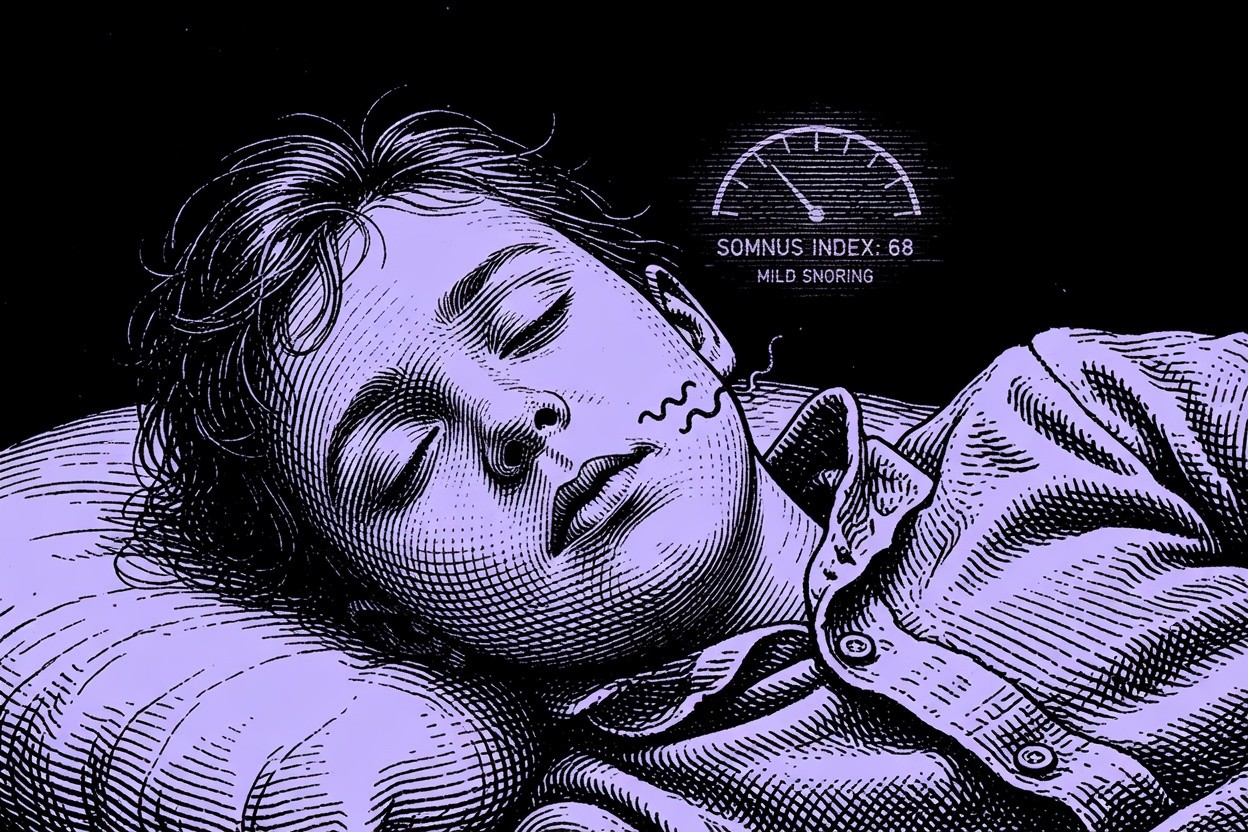
You've had a sleep study. Your doctor said you have mild sleep apnea — an apnea-hypopnea index (AHI) between 5 and 15 events per hour — and now you're wondering whether you really have to wear a CPAP mask for the rest of your life.
The short answer: probably not. CPAP is not the only path forward, and for many mild OSA patients it is not the right first step. This guide covers what mild OSA means, why CPAP adherence in this group is so low, and the full range of evidence-based alternatives currently available.
What "Mild" Sleep Apnea Actually Means
Obstructive sleep apnea is classified by the apnea-hypopnea index (AHI) — breathing events per hour where airflow is completely blocked or significantly reduced. Mild OSA is an AHI of 5 to 14.9 events per hour. Five to fifteen breathing disruptions per hour sounds manageable. In practice, it can mean 40 to 120 airway obstructions every night — each triggering a micro-arousal that fragments sleep architecture, often without the sleeper being aware.
Why Mild OSA Still Matters
Despite the label, mild OSA commonly causes daytime fatigue, cognitive fog, fragmented sleep, morning headaches, and snoring that disturbs bed partners. Untreated sleep-disordered breathing at any severity is associated with increased cardiovascular risk, hypertension, and metabolic dysfunction. "Mild" describes the AHI number — not the clinical significance of leaving it untreated.
Why So Many Mild OSA Patients Struggle With CPAP
CPAP delivers pressurized air through a mask during sleep, physically holding the airway open. A retrospective study published in BMC Pulmonary Medicine found that only 25.7% of mild OSA patients remained adherent to CPAP at 12 months — roughly three out of four stopped within a year. Common barriers include mask discomfort, nasal congestion, noise, and travel inconvenience.
The Full Landscape of Non-CPAP Options
For patients who cannot or will not use CPAP, several evidence-based alternatives exist.
Positional Therapy
For patients with positional OSA — an AHI at least twice as high supine versus side-sleeping — positional therapy is a first-line option with strong evidence and zero invasiveness. Research shows approximately 49.5% of mild OSA patients have a clinically meaningful positional component.
Weight Loss and Lifestyle Modification
Excess body weight is a major anatomic driver of OSA, and even modest weight loss can meaningfully reduce AHI. Pre-sleep alcohol avoidance is also underutilized — alcohol relaxes pharyngeal musculature and worsens collapsibility.
Oral Appliance Therapy (Mandibular Advancement Devices)
Custom-fitted mandibular advancement devices (MADs) are the AASM-endorsed first-line alternative to CPAP for mild to moderate OSA. A MAD repositions the lower jaw forward during sleep, preventing airway collapse without a mask or machine. Evidence supports AHI reductions of 50% or more in a majority of mild to moderate OSA patients using properly fitted devices.
Myofunctional Therapy
Myofunctional therapy consists of structured exercises for the tongue, soft palate, and oropharyngeal muscles. A systematic review in Sleep found approximately 50% AHI reductions in adults. Most effective as part of a multi-modal plan.
Upper Airway Surgery
Uvulopalatopharyngoplasty (UPPP) removes or reshapes soft palate and pharyngeal tissue to widen the airway. For mild OSA or primary snoring, the morbidity profile demands careful weighing: general anesthesia, overnight hospital stay, 2–3 weeks of significant throat pain.
Hypoglossal Nerve Stimulation (Inspire)
Inspire HNS is specifically indicated for moderate to severe OSA in CPAP-intolerant patients with AHI ≥ 15. Most mild OSA patients do not meet these criteria.
Palatal Procedures
For palate-dominant obstruction, palatal stiffening is a targeted option. The Pillar Procedure served this role for nearly 15 years before exiting the commercial market around 2019. No FDA-cleared palatal implant is currently available in the U.S., but next-generation systems are in development.
New Options on the Horizon
Somnus Technologies, Inc. is developing HYPNARA™ (a palatal implant system) and MORPHEX™ AI (a smart oral device with AI-driven snore and airway detection). Neither is FDA cleared or currently available. Follow developments at somnustech.ai.
The Bottom Line on Mild Sleep Apnea Treatment Without CPAP
Mild sleep apnea deserves real treatment, but the path is not one-size-fits-all. Evidence-based alternatives including mandibular advancement devices, positional therapy, weight management, myofunctional therapy, and palatal procedures offer meaningful relief with better adherence and less disruption than nightly CPAP. The best mild sleep apnea treatment is the one you will actually use, paired with the one that targets your specific obstruction site.
ABOUT THE AUTHOR
Matt Cronin
Founder & CEO, Somnus Technologies
Matt Cronin is a medical device operator with more than 20 years of experience in MedTech
commercialization, regulatory affairs, and product development. He is the founder and CEO of
Somnus Technologies, where he is leading the development of HYPNARA™ (a minimally invasive
palatal implant system) and MORPHEX™ AI (a smart oral device platform) for the treatment of
snoring and obstructive sleep apnea.
A U.S. Navy veteran and Lean Six Sigma Black Belt, Matt holds executive finance credentials from
Northwestern's Kellogg School of Management. He has personally invested in Somnus
Technologies and is committed to the mission of building ethical, effective, transparent MedTech
for patients who have been failed by existing options.
Contact: mcronin@somnustech.ai | somnustech.ai
Frequently Asked Questions
Q: What qualifies as "mild" sleep apnea? A: Mild obstructive sleep apnea is defined as an apnea-hypopnea index (AHI) of 5–14.9 events per hour. Moderate OSA is 15–29.9 events per hour. Severe is 30 or more. The designation matters because treatment recommendations differ significantly across severity categories — and mild OSA has the broadest range of treatment options beyond CPAP.
Q: Does mild sleep apnea need to be treated? A: Not always — it depends on symptoms and cardiovascular risk factors. An AHI of 6 with no daytime symptoms and no cardiovascular comorbidities may reasonably be managed with behavioral modifications and monitoring. The same AHI with significant daytime sleepiness, hypertension, or other risk factors warrants active treatment.
Q: Can mild sleep apnea get worse over time? A: Yes. OSA is a progressive condition for many patients, particularly if contributing factors like weight gain, age-related muscle laxity, or nasal obstruction worsen over time. This is one reason why even mild, asymptomatic OSA benefits from monitoring — and why understanding the anatomical drivers of your specific OSA helps predict trajectory.