The Somnus Index: How We Score Your Sleep Intelligence Each Night
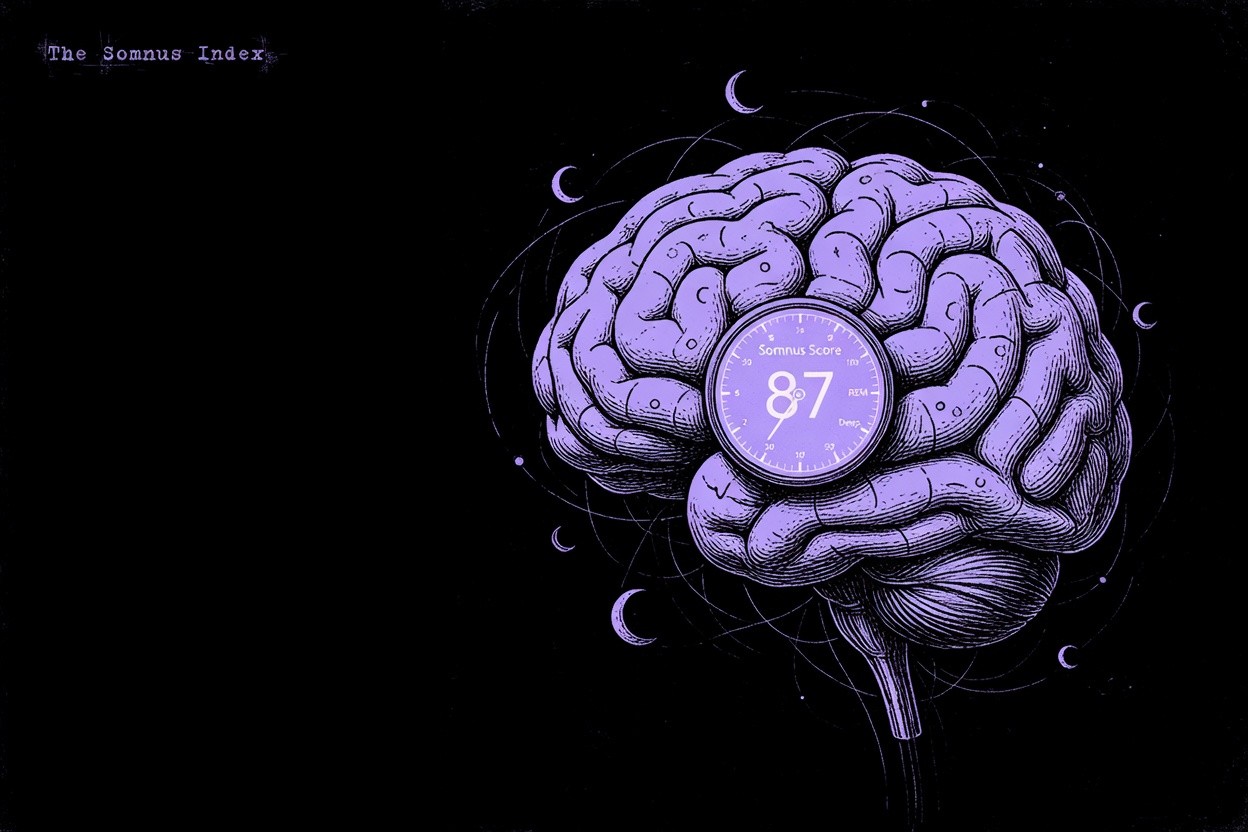
The Somnus Index™: A Smarter Way to Understand Your Sleep
By Matt Cronin, Founder & CEO, Somnus Technologies
Most sleep apps give you a number. Few tell you what it means — and almost none can tell you why.
The Somnus Index™ is different. It's a 0–100 composite sleep intelligence score generated every night by the Somnus Sleep™ app. It's not a mood check-in. It's not a guess based on how long you were in bed. It's a structured assessment of how well your body actually performed while you slept — powered by a proprietary multi-signal scoring engine that no other consumer sleep platform offers.
This article explains what the Somnus Index™ is, what it can tell you about your sleep, and why it represents a fundamentally different approach to sleep wellness.
Why a Single Sleep Score?
Sleep research has a complexity problem. There are dozens of variables that influence sleep quality — and each one matters in a different way. But when you wake up at 6am and have three minutes before your day starts, you don't need a research paper. You need a number you can act on.
The Somnus Index™ exists to solve that problem. It takes multiple streams of clinical-grade data — spanning key biometric signals including heart and respiratory data, combined with advanced acoustic intelligence — and delivers a single number between 0 and 100. Higher is better.
What makes the Somnus Index™ different from the readiness scores or sleep scores offered by consumer wearables is that it was designed from the clinical side first. The proprietary weighting structure reflects the relative clinical significance of each variable in sleep medicine literature — not what's easiest to measure with an accelerometer on your wrist.
The specific weighting configurations, signal fusion methodology, and scoring architecture are protected as trade secrets of Somnus Technologies, Inc. and are not publicly disclosed.
What Powers Your Score
The Somnus Index™ is powered by a proprietary multi-signal scoring engine that fuses key biometric signals — including heart and respiratory data — with advanced acoustic intelligence. The underlying multi-channel data capture and analysis platform is protected by 15+ patent applications pending.
Here's what you should know about how the score works — without revealing the proprietary methodology behind it.
Biometric Intelligence
Your body tells a detailed story every night through its cardiovascular and respiratory signals. The Somnus Index™ listens to that story. While you sleep, the platform captures key biometric data streams that reflect how well your autonomic nervous system is recovering, how your cardiovascular system is performing, and whether your sleep architecture — the structure, depth, and staging of your sleep — is actually doing its job.
These biometric signals are drawn from wearable health platforms like Apple HealthKit, with support for additional wearable ecosystems on our roadmap. The data your wearable captures overnight is automatically pulled into the Somnus Sleep™ app each morning and fed into the proprietary scoring engine.
What matters isn't any single metric in isolation. It's how multiple signals interact, trend over time, and compare to your personal baseline. That multi-signal fusion is what makes the Somnus Index™ fundamentally different from single-metric sleep scores — and it's the core intellectual property we protect.
Acoustic Intelligence
The second data channel is unique to the Somnus platform. Using the acoustic sensing capability built into the Somnus Sleep™ app, the system assesses your sleep environment for disruption events — including breathing irregularities and environmental noise intrusions that fragment your rest.
This is the dimension that most sleep apps and wrist-based wearables ignore entirely. Your wearable can tell you your heart rate dropped at 2am. The Somnus platform can correlate that with what was happening acoustically in your bedroom at the same moment. That correlation — powered by our proprietary Acoustic BSA™ Engine — is where the real insights live.
Longitudinal Awareness
Sleep quality isn't a single-night phenomenon. A poor night followed by a great night doesn't reset the ledger. The Somnus Index™ incorporates a rolling awareness of your recent sleep history, meaning your score reflects not just last night, but the arc of your past week — which is how sleep quality actually affects your health and performance.
This longitudinal view is what separates a wellness tool from a novelty. One number, one night, is interesting. A 30-day trend is where the real value lives.
What Your Somnus Index™ Number Means
The Somnus Index™ runs from 0 to 100. Higher scores reflect more restorative sleep and stronger physiological recovery signals. Lower scores indicate that one or more key dimensions fell short of your personal baseline — and that your body may not have gotten the recovery it needed.
As a general orientation:
Strong scores indicate restorative sleep across multiple dimensions — the kind of night that supports cognitive performance, physical recovery, and mood stability.
Mid-range scores suggest solid sleep with meaningful room for improvement — often traceable to a specific pattern when you look at the breakdown over time.
Persistently lower scores are worth paying attention to, particularly if they're accompanied by daytime sleepiness, morning headaches, or feedback from a bed partner about loud snoring. A sustained pattern like that warrants a conversation with a qualified sleep specialist.
The Somnus Index™ is a wellness tool. It is not a medical device and does not diagnose sleep disorders. The specific scoring thresholds, band definitions, and weighting configurations are part of Somnus Technologies' proprietary scoring methodology and are protected as trade secrets.
How to Actually Improve Your Score
The Somnus Index™ is most useful when you treat it as a trend, not a daily report card. Here are the highest-leverage improvements based on what sleep medicine research consistently shows.
Anchor your sleep timing. Sleep regularity — going to bed and waking at consistent times — has a larger impact on sleep quality than total hours in bed. Your score responds to consistency faster than almost any other intervention.
Reduce alcohol within three hours of sleep. Alcohol is one of the most reliable disruptors of restorative sleep in the research literature. Even one drink close to bedtime can move your Somnus Index™ measurably.
Address your sleep environment. If the acoustic intelligence layer of your Somnus Index™ is flagging recurring disruption events, something is fragmenting your sleep — including potentially your own airway. This is the factor most people overlook and the one most connected to genuine long-term wellness.
Watch the trend, not the number. A single night's Somnus Index™ is a snapshot. A 30-day trend is a portrait. Use the seven-day and thirty-day trend views in the Somnus Sleep™ app to track your sleep wellness over time.
The Somnus Index™ and Airway Health
One thing the Somnus Index™ does that standard sleep scores don't is connect your nightly wellness data to the question of airway health. Snoring, upper airway resistance, and obstructive sleep apnea are among the most common and most undertreated causes of poor sleep quality in adults — and they're largely invisible to wrist-based wearables.
If your Somnus Index™ is persistently in the lower range despite good sleep hygiene, and particularly if the acoustic intelligence layer shows recurring patterns worth investigating, that's a signal to have a conversation with a qualified sleep specialist. Poor sleep quality driven by airway-related disruption doesn't improve with better habits alone — the underlying anatomy doesn't change with earlier bedtimes.
When Shawn™ — our AI sleep companion — notices trends in your data that suggest your sleep wellness could benefit from a professional conversation, he'll gently encourage you to connect with a qualified provider through the Somnus Provider Directory™. One tap, one connection. No diagnosis, no medical claims — just a smart nudge to take the next step for your own wellness.
For a deeper look at how airway health intersects with sleep quality — and why weight loss alone often isn't enough to resolve it — read our piece on Ozempic and sleep apnea.
Frequently Asked Questions
What is the Somnus Index™?
The Somnus Index™ is a 0–100 nightly sleep wellness score generated by the Somnus Sleep™ app. It fuses key biometric signals — including heart and respiratory data — with advanced acoustic intelligence into a single composite score using a proprietary multi-signal scoring engine. The weighting configurations, signal fusion methodology, and scoring architecture are protected as trade secrets of Somnus Technologies, Inc.
Is the Somnus Index™ the same as a sleep score from a fitness wearable?
No. Most wearable sleep scores are primarily based on movement and basic heart rate data. The Somnus Index™ uses a clinically informed, proprietary framework that uniquely incorporates advanced acoustic intelligence — a dimension unavailable to wrist-worn devices. The specific methodology is proprietary and not publicly disclosed.
What is a good Somnus Index™ score?
Higher scores reflect more restorative sleep. Scores in the upper range indicate strong sleep quality and physiological recovery. Persistently lower scores are worth discussing with a qualified sleep specialist, particularly when accompanied by snoring or daytime fatigue. The specific band definitions are part of Somnus Technologies' proprietary scoring methodology.
Can the Somnus Index™ detect sleep apnea?
The Somnus Index™ is a wellness tool, not a diagnostic device. It does not diagnose sleep apnea or any medical condition. However, persistent patterns in your data — particularly when acoustic intelligence signals are present — may indicate that a conversation with a qualified sleep specialist could benefit your wellness. The Somnus Provider Directory™ makes it easy to take that step.
How does the Somnus Sleep™ app work without a wearable?
The Somnus Sleep™ app uses your smartphone's built-in microphone and the proprietary Acoustic BSA™ Engine to assess your sleep environment and breathing patterns without requiring a wrist-worn device. When paired with a wearable via Apple HealthKit, the scoring engine fuses both data channels for a more complete picture. Support for additional wearable ecosystems is on our roadmap.
How often does my Somnus Index™ update?
Your Somnus Index™ updates each morning after a sleep session. The app also maintains seven-day and thirty-day trend views so you can track your sleep wellness over time. Shawn™, your AI sleep companion, delivers personalized insights based on your trends each morning.
Matt Cronin is the Founder and CEO of Somnus Technologies, a sleep health technology company developing proprietary sleep wellness solutions. The company's intellectual property portfolio includes 15+ patent applications pending, with the Somnus Index™ scoring methodology protected as a trade secret. Somnus Technologies is pursuing FDA 510(k) clearance for the HYPNARA™ palatal implant system and MORPHEX™ AI smart oral appliance platform.
The Somnus Sleep™ app and Somnus Index™ are wellness tools and are not intended to diagnose, treat, cure, or prevent any disease or medical condition. Somnus Sleep™, HYPNARA™, MORPHEX™ AI, and related technologies are not yet cleared or approved by the U.S. Food and Drug Administration and are not currently available for sale. Statements regarding product features, capabilities, and performance are forward-looking and do not represent cleared indications for use. Somnus Index™ scoring weights and fusion algorithms are proprietary trade secrets of Somnus Technologies, Inc. Unauthorized use, reverse engineering, or disclosure is prohibited. Patents pending. © 2026 Somnus Technologies, Inc. — Confidential & Proprietary.